

Subscribe to out newsletter today to receive latest news administrate cost effective for tactical data.
Let’s Stay In Touch



Phone:
+91 911 112 9118
shahdentalratlam@gmail.com

Subscribe to out newsletter today to receive latest news administrate cost effective for tactical data.
2478 Street City Ohio 90255
Subscribe for newsletter
Phone:
Monday - Saturday:9 am - 8 pm
Sunday:9 am - 5 pm
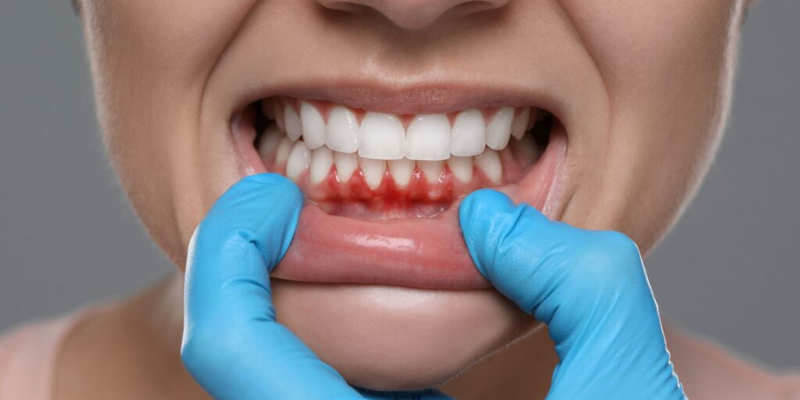
Gum disease, also known as periodontal disease, is an infection of the tissues that support your teeth. It usually starts with plaque buildup, leading to swollen, red, or bleeding gums. If left untreated, it can progress to more serious stages, causing gum recession, bone loss, and even tooth loss. Common signs include bad breath, sensitive gums, and loose teeth. Since gum health is directly linked to overall health, timely treatment is important. Professional care can stop the disease, restore gum health, and protect your smile for the long term.
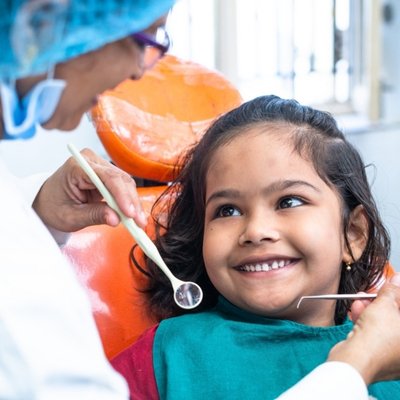
At Shah Dental Clinic, we focus on both prevention and treatment of gum disease to keep your mouth healthy and strong. Our dentists use advanced diagnostic tools to identify early signs and provide effective treatments such as deep cleaning (scaling and root planning) to remove plaque and bacteria from below the gumline.
For more advanced cases, we design personalized care plans to restore gum health and prevent further damage. With a gentle approach and patient-focused care, we help you regain healthy gums and a confident smile.
Gum disease treatments are among the most commonly performed dental procedures. In the U.S., almost half of all adults aged 30 or over have some form of gum disease. About 9% of adults in the U.S. need advanced gum disease treatment.
Whether you need surgical or nonsurgical gum disease treatment depends on several factors, including:
There are several nonsurgical and surgical gum disease treatment options available. In addition, many periodontists offer sedation dentistry to keep you comfortable during your treatment. To learn more, talk to a healthcare provider.
People with early-stage gum disease — such as gingivitis or mild periodontitis — can benefit from nonsurgical therapies. Nonsurgical treatments for gum disease include:
Dental prophylaxis is a routine dental cleaning, like the one that many people have with their hygienist twice a year. During this procedure, a provider removes plaque and tartar from your teeth surfaces.
People who have gingivitis (the first stage of gum disease) can often reverse it with professional dental cleanings and improved oral hygiene at home. Depending on your specific situation, you might need more frequent cleanings with your dentist or hygienist to keep harmful bacteria at bay.
Scaling and root planing — a deep dental cleaning — reaches deep beneath your gum line to remove plaque and tartar on your root surfaces. In addition to thoroughly cleaning your teeth, your periodontist or dental hygienist will smooth away any rough spots on your tooth roots. This helps prevent bacteria and plaque from reattaching. Your periodontist will give you local anaesthesia to numb your gums and keep you comfortable during this procedure.
Your periodontist may use antibiotics — either as a stand-alone treatment or in combination with other procedures. Common antibiotics used in the treatment of gum disease include products like minocycline HCl (Arestin®) or chlorhexidine (PerioChip®). Your periodontist can place these medications in the space between your gums and teeth (the periodontal pocket).
During this procedure, your periodontist uses a tiny laser to remove diseased tissue and kill bacteria under your gums. In some cases, providers recommend laser therapy as an alternative to traditional gum surgery. Unlike traditional gum surgery, laser therapy doesn’t require incisions or sutures.
People with moderate to advanced periodontal disease usually require surgical intervention. Surgical treatments for gum disease include:
During this procedure, your periodontist will create incisions along your gum line, then temporarily move your gums away from your teeth. This allows them to see the roots underneath. Next, they’ll remove the tartar buildup and clean your root surfaces. In some instances, they may smooth and reshape areas of damaged bone, making it harder for bacteria to hide and grow. Finally, they’ll reposition your gums and suture them into place.
A dental bone graft uses your own bone, donated bone or synthetic bone to rebuild areas that have been damaged by gum disease. The graft serves as a type of scaffolding that holds space until your body can regenerate new bone. Periodontists often perform bone grafting in combination with pocket reduction surgery.
A gum graft uses your own tissue, donated tissue or synthetic tissue to treat gum recession (when your gums pull away from your teeth). Gum recession is a common symptom of periodontal disease.
During gum grafting surgery, your periodontist places the tissue graft in areas where your gums have receded and sutures (stitches) it into place. If they use your own tissue, they’ll take the graft from the roof of your mouth.
Periodontal disease can cause gaps that form between your tooth root and bone. During guided tissue regeneration, your periodontist places a membrane in the damaged area to keep your gum tissue from growing where bone should be. This gives your body time to regenerate bone around your tooth. In many cases, periodontists place a bone graft during the same procedure to help this process.